The best download depends on the kind of play we want from a phone. Some players want a quick match, while others want a story that can fill their time.
Our picks cover action, strategy, role-playing, cards, and location-based play. That range gives us a way to match a game to our mood, habits, and available time.
The Top 10 Best Android Mobile Games of 2026 are recommendations, not a claim that every player will love the same title. We each bring different tastes to mobile games.
Some people want touch controls and short sessions. Others want to explore a world, plan a long strategy, or meet friends in multiplayer.
We’ll weigh each game’s appeal and its limits, so no pick has to fit everyone. A roguelike is a run-based game built around repeated attempts, where defeat restarts a run and learning helps shape later attempts.
We’ll begin with how we chose the games, then offer a quick comparison. After that, each profile can help us find a game that fits.
Key Takeaways
- Our picks cover several genres and ways to play.
- We should choose by preferred gameplay, not by a universal ranking.
- Some games suit short sessions, while others ask for more time.
- Device fit and controls can shape the experience.
- Free-to-play access does not mean every optional item costs nothing.
Top 10 Best Android Mobile Games of 2026: How Did We Choose Them?
We favor games with a clear reason to choose them on Android and a useful spread of genres. Variety matters because players want different things from mobile games.
Each recommendation has a distinct appeal and a limit, rather than a claim that one game works for everyone. We also consider how its gameplay fits touch controls or short sessions when those facts are known.
We choose games for distinct appeal, genre variety, and a clear sense of who may enjoy them. No single pick fits every player.
We use four checks to guide the list. These criteria help us explain why each game belongs without claiming a universal winner.
- Gameplay variety: Does the game offer a clear style, from action to strategy?
- Phone fit: Do known controls or session patterns suit mobile play?
- Distinct appeal: Can players tell what makes the game different?
- Honest limit: What might make the game a poor fit for some people?
We do not claim hands-on testing or current device testing. We also do not claim that every title received a verified 2026 update.
That distinction matters because mobile games can change over time. Updates may affect content, device fit, or purchase options.
What makes a game work well on a phone?
A mobile game needs a play style that can make sense on a small screen. Some games use touch controls well, while others offer a training mode or fit a brief session.
We consider those details only when the facts support them. We do not assume that every game works well with the same controls or in the same amount of time.
Genre matters, too. A role-playing game can reward story and exploration, while a shooter may appeal to players seeking direct competition.
What these recommendations do and do not promise
Our list offers starting points, not a promise that every game suits every Android phone. Each profile names a likely appeal and a possible drawback.
We also avoid treating popularity as proof of quality. A game can be a strong match for one player and a poor fit for another.
The next section gives a quick orientation across five genres. Then the individual picks can add the details a checklist cannot hold.
How do five representative picks compare at a glance?
If we want to narrow our choices before reading longer profiles, a quick comparison can help. These five games represent different kinds of gameplay, not a ranked order.
Every title in the table is free-to-play, though that describes its download model rather than every optional purchase. The appeal column sticks to each game’s central format.
| Game | Genre | Core appeal | Access |
|---|---|---|---|
| Genshin Impact | Open-world RPG | Open-world exploration | Free-to-play |
| Honkai: Star Rail | Turn-based RPG | Turn-based role-playing | Free-to-play |
| Call of Duty: Mobile | Shooter | Multiplayer and battle royale modes | Free-to-play |
| Clash Royale | Strategy card battler | Card-based strategy battles | Free-to-play |
| Pokémon Go | Location-based game | Augmented reality and real-world places | Free-to-play |
The genre column gives us a fast way to find a likely match. Players who enjoy a story-led RPG can start with one of the role-playing games.
Someone seeking multiplayer can compare the shooter and card battler. Location-based play stands apart because it connects a game to real places.
Use the table as a map, not a verdict. It does not include each game’s strengths, drawbacks, or finer details.
Those details matter once we have a genre in mind. The game-by-game picks explain what the table cannot fit.
Is Genshin Impact the right open-world RPG for you?
If we want to wander through a world instead of rushing into another match, Genshin Impact may fit. Exploration leads its open-world RPG experience.
The game suits players who enjoy exploring, solving puzzles, and following a story. Its pace leaves room to roam between fights.
Genshin Impact launched in 2020. Its open world includes regions such as Inazuma, Sumeru, Fontaine, and Natlan.
That variety gives players places to explore, puzzles to solve, and side quests to follow. The world rewards curiosity as much as a direct push through the main story.
Combat lets us switch between four characters with different skill sets. That choice adds a tactical layer while keeping action within the larger journey.
We can move between characters as a fight changes. The group system can make combat feel more varied than using one character throughout.
Story and characters give exploration a purpose. Players who like to learn about a world may enjoy the time spent between battles.
The official Genshin Impact Google Play listing describes its open world, character teams, and optional in-game purchases.
Players seeking only quick combat may find the exploration and dialogue a poor fit. A long stretch of story or travel may not suit every session.
We should also expect a broad adventure rather than a tightly focused battle loop. Its open-world pace is part of the appeal, and part of the commitment.
Choose it for the world, not only for its fights. The next role-playing pick trades open exploration for turn-based battles.
Does Honkai: Star Rail suit a turn-based RPG fan?
If we would rather plan a turn than react in real time, Honkai: Star Rail offers a different RPG pace. Deliberate battles shape its sci-fi story.
Its turn-based combat rewards players who like tactical choices. The game comes from HoYoverse and builds those choices around party skills and resources.
Skill Points affect how often characters can use their skills. Break effects and Light Cone synergies add more choices to a battle.
That system gives each move a purpose. We can consider what a character needs now and how that choice may help the team later.
Story-led play is another draw. Players who enjoy characters and narrative can follow the plot between battles.
The sci-fi setting gives the game a distinct tone. Its focused structure differs from an RPG built around free movement through a large world.
Progress has a limit, though. Trailblaze Power can restrict story progress and access to high-end content.
Having extra time does not remove that Trailblaze Power limit. Players may reach a point where they cannot keep progressing as quickly as they want.
That can frustrate players who prefer to advance at their own pace. It also makes the game a less natural fit for someone seeking endless story progress.
We should choose it for tactical battles and narrative, not for open-ended play at every moment. Its rules make each fight feel planned rather than rushed.
The shift from story-led RPG play points toward a more action-focused choice. Dead Cells replaces long-form narrative with repeatable runs.
Is Dead Cells a good choice for action and replayability?
After a failed run, we may want to start again and try a new route. That repeat attempt sits at the heart of Dead Cells.
Dead Cells suits players who enjoy fast action and learning through defeat. Its colorful 2D side-scrolling combat rewards practice.
The game is a roguelike, with runs through a changing castle. Weapons, enemies, levels, and biomes can vary between attempts.
That change keeps repeated play from feeling exactly the same. We can learn how enemies behave and adjust our choices on the next run.
Defeat is part of the design, not a rare mistake. A run ends, and players begin again with more knowledge of its dangers.
Fast combat makes each choice feel immediate. The weapons and enemies ask us to watch the screen and respond quickly.
Use this fit checklist before choosing:
- We can accept repeated runs after defeat.
- We want action rather than a slow strategy match.
- We are willing to learn by failing and trying again.
Players who dislike restarting may prefer a different game. Repeated attempts are central to the mobile version, not a side feature.
Players who enjoy a challenge may find that structure rewarding. Each attempt offers another chance to read the level and improve.
We can also choose it when a story is less important than responsive combat. Its focus stays on action and the next run.
For a slower choice, we can trade movement and reflexes for cards. Slay the Spire turns repeated attempts into a deckbuilding challenge.
Is Slay the Spire the best fit for a mobile deckbuilder?
When a fight asks us to play one card or save it, planning matters more than reflexes. That pause for choice defines Slay the Spire.
Its turn-based card combat and touch-friendly controls suit mobile play. Players can focus on a choice instead of racing through a fight.
Slay the Spire combines deckbuilding with roguelike runs. We shape a deck as we move through an attempt, then face new fights and choices.
Cards drive the combat loop. Each turn asks us to weigh the cards in hand against the threat before us.
That makes the game easy to start learning but difficult to master. Simple actions can lead to deeper strategy as we learn how cards work together.
The touch controls make it natural to choose and play a card. This straightforward input supports the careful pace of each battle.
Players who like card games may still prefer another style. The game centers on building a deck across runs, not on every kind of card play.
We can take time to consider a move, then see how it affects the fight. That rhythm makes each session feel different from an action game.
Choose Slay the Spire if card-based strategy sounds fun, not because every player enjoys deckbuilders. Its learning curve rewards patience and experimentation.
We do not need to master every card before starting. Learning which choices work is part of the appeal.
Balatro offers a different card game, built around poker hands and scoring combinations. Its strategic choices change how those hands earn points.
Will Balatro click if you enjoy cards but not poker?
A familiar poker hand can score far more when a Joker adds a bonus. That twist is the hook in Balatro.
Players do not need poker expertise to approach the game, though its choices still call for strategy. Poker hands provide the scoring base.
Balatro is a roguelite card game built around playing hands for points. Jokers add bonuses that can change how a hand scores.
We try to raise the Ante as the challenge grows. Choosing which Jokers to take or remove becomes part of shaping a run.
That creates a puzzle around the cards we hold and the bonuses we have built. Players can learn the basic hand patterns, then look for stronger combinations.
The game uses poker hands as a foundation, not as a test of poker skill. We can learn the scoring rules as we play.
Still, the hands matter. Players who enjoy finding combinations may like how Jokers change familiar patterns.
Balatro may not fit players who dislike hand-based scoring. Its central loop keeps returning to cards, points, and the rising Ante.
We can approach it as a strategy game with poker-inspired rules. The value comes from making choices around bonuses, not from knowing a full poker table.
Its focused card play offers a quieter contrast to games built around reflexes. Call of Duty: Mobile shifts us to multiplayer shooting.
Should you download Call of Duty: Mobile for fast shooter matches?
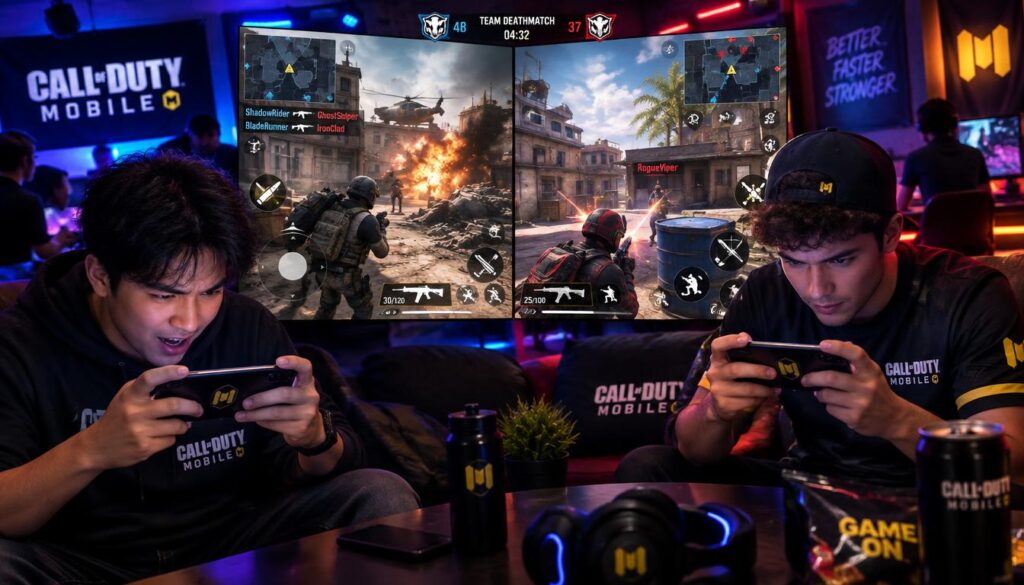
If we want a competitive shooter instead of a long story, Call of Duty: Mobile offers quick action. Its multiplayer focus puts us into fights.
The game combines fast multiplayer shooting with battle royale. Players can also choose ranked play and seasonal events.
Its map rotation includes Nuketown, Crash, and Hijacked. Familiar maps give players different spaces for competitive matches.
That mix gives the game more than one way to play. We can choose a direct multiplayer match or a battle royale mode.
Controller support is available, but a controller is not required. Players can use mobile controls and check the game’s settings for current options.
Fast time-to-kill can make a fight end quickly. Casual players may find that pace unforgiving while they learn the maps and modes.
Frequent bundle promotions may put off players who dislike sales prompts. They can add friction even when someone only wants to play.
We should not assume progression has no friction. The free-to-play model does not guarantee that every item or step feels equally accessible.
Ranked play and seasonal events give regular players reasons to return. Those features may matter less to someone seeking an occasional casual match.
The next pick keeps competition but shifts from reflex-led shooting to short strategy matches. Clash Royale makes each battle a compact planning test.
Is Clash Royale a strong pick for short strategy sessions?
If we have only a few minutes, Clash Royale gives us a match with a clear endpoint. Three minutes is its listed match length.
Each match lasts three minutes, making the game a natural choice for a brief competitive session. Players build a deck of eight cards.
The goal is to take down enemy towers. We choose cards and decide when to send them into the fight.
That small deck creates a quick strategy puzzle. Players must make choices with the cards they selected, then react to the other player.
The short format does not mean each match is simple. A few card choices can change the way a tower battle unfolds.
Recent updates have rebalanced free-to-play progression. That change may matter to returning players who remember earlier concerns about pay-to-win play.
We should not expect every card or upgrade to be available right away. Progression can still shape what a player has ready for a match.
Players with only a small break may like the clear time limit. Those who want long story chapters may prefer a different format.
We can use the eight-card deck to test different plans. The game’s strategy comes from choosing how to spend those options during a match.
From compact tower battles, we can move to a large-scale battle royale. PUBG Mobile offers a different kind of multiplayer pressure.
Is PUBG Mobile the battle royale you want on Android?
We can learn the controls in training or enter a live match and adapt on the fly. That first choice shapes how we start PUBG Mobile.
PUBG Mobile supports 100-player fights, with modes for different kinds of combat. Classic, Team Deathmatch, and Metro Royale offer distinct ways to play.
Classic is the central battle royale mode. Team Deathmatch offers a direct team fight, while Metro Royale gives players another mode to try.
That variety helps the game reach beyond one type of shooter match. Players can choose an option that better matches their mood.
The training mode offers a place to get familiar with the game. Customizable controls let players adjust their setup.
The official PUBG Mobile Google Play listing describes its 100-player Classic fights, training mode, and customizable controls.
Training can help us get oriented before joining a live match. We can practice and adjust before facing other players.
We should choose PUBG Mobile if a range of shooter modes appeals to us. It may be less suitable for someone who wants a quiet solo game.
Its multiplayer focus puts the emphasis on combat and player choices. We can use the training mode to learn before committing to a match.
From multiplayer competition, we can turn to an augmented-reality game tied to real-world places. Pokémon Go asks us to connect play with where we go.
Is Pokémon Go still worth playing for location-based fun?
We might check a nearby place while out walking and find a Pokémon encounter. Real places matter in Pokémon Go.
Its augmented-reality and location-based play connects catching Pokémon to the real world. The game launched in 2016.
That design makes collecting part of going places. Players can catch Pokémon and track their collections in the Pokédex.
The Pokédex tracks shiny, shadow, and purified Pokémon. Those categories give collectors different goals to follow.
Recurring Community Days and raid battles add event and group activities. They can give players reasons to meet up and play together.
The Pokémon Go Google Play listing describes real-world exploration, Pokédex collecting, and raid battles.
Pokémon Go is a poor fit if we want to play entirely from one spot. Its location-based design ties play to real places.
We should also avoid planning around a particular event or local activity without checking what is available. Event schedules and local options can vary.
Players who enjoy collecting may like watching the Pokédex grow. The game pairs that goal with walks and shared activities.
Someone who prefers a stationary experience may want another genre. Civilization VI shifts us from walking and collection to building a civilization.
Is Civilization VI playable on an Android phone?
We may wonder whether to take one more turn or put the phone away. Long-range planning makes Civilization VI easy to keep thinking about.
Civilization VI can struggle on some Android devices, and its interface suits a tablet-sized screen better. That practical limit matters before we start.
The game is a 4X strategy title. Players begin in the Stone Age and can progress toward space colonization.
Growing a civilization means managing resources, technology, culture, buildings, territory, armies, and citizen needs. Each choice can affect what comes later.
That wide set of systems creates a long-term strategy experience. Players who enjoy planning several steps ahead may find plenty to consider.
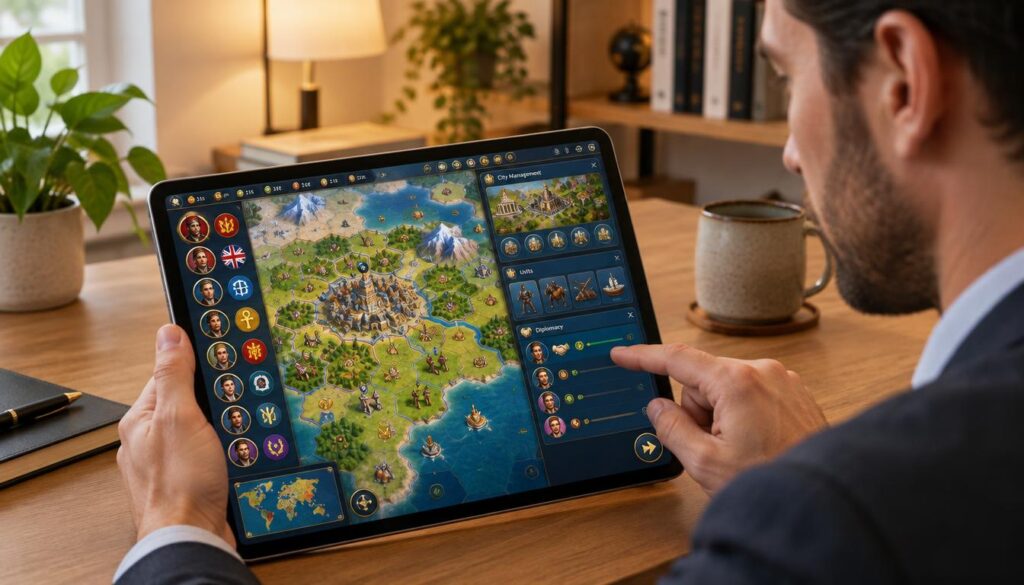
The official Civilization VI Google Play listing describes its Android version and available in-app content.
A phone can make the interface feel crowded. A tablet-sized display gives the game’s many menus and choices more room.
We should check device fit before choosing it for Android. The game can struggle on some devices, and no single phone experience is guaranteed.
This pick may suit players who want a deep strategy game more than quick rounds. It asks us to keep track of many systems at once.
We can narrow the choice by matching a game to our genre and session style. The next guide turns those preferences into a shortlist.
Which game fits your preferred genre or session?
The best match depends on our preferred kind of play, not a universal winner. Start with the experience we want from a game.
We should avoid a pick when its central format sounds like a chore. A story skeptic may not enjoy a long RPG, and a player who dislikes walking may not enjoy location-based play.
Start with the kind of gameplay you enjoy
Genre gives us a useful first filter. This short list connects five styles with a clear reason to try each one.
| Genre | Pick | Why it fits |
|---|---|---|
| Open-world RPG | Genshin Impact | Exploration-led play |
| Turn-based RPG | Honkai: Star Rail | Tactical turn-based combat |
| Action roguelike | Dead Cells | Repeat-run action |
| Deckbuilder | Slay the Spire | Card-based strategic runs |
| Shooter | Call of Duty: Mobile | Multiplayer and battle royale options |
Our mobile games by genre guide offers another way to compare picks across Android and iOS.
Match the game to the time you have
The genre is only part of the choice. We should also think about how much attention a session may ask from us.
- Story or action: Choose a story-led RPG for narrative, or an action game for direct combat.
- Repeated runs: Pick a roguelike only if restarting after defeat sounds acceptable.
- Multiplayer: Choose a competitive game if we want to face or team up with other players.
- Location-based play: Pick Pokémon Go if going to real-world places sounds appealing.
We should skip any game whose main loop conflicts with our habits. A location-based game may not suit stationary play, while a roguelike may frustrate players who dislike restarts.
That simple check can save us from downloading a game for the wrong reason. Once we have a shortlist, we can consider device fit and controls.
Will these games feel comfortable on your Android device?
An appealing game can still feel uncomfortable if its input or screen demands do not suit us. Comfort counts when we play on a phone.
We should check controls and screen fit before installing. A familiar genre does not guarantee that the interface will feel right.
Check how you want to control the game
Games use different ways to handle movement, aiming, and choices. These known details can help us think about the fit.
| Game | Supported input or interaction detail | Practical consideration |
|---|---|---|
| Call of Duty: Mobile | Controller support | Controller is an option, not a requirement |
| PUBG Mobile | Customizable controls and training mode | Adjust controls and practice first |
| Slay the Spire | Touch-friendly controls | Card choices suit touch input |
| Civilization VI | Tablet-sized screen recommended | Small screens may feel crowded |
Our control preference may depend on the game. Card choices can feel natural with touch controls, while a shooter gives us more than one input option.
Think about screen size and device performance
Screen space matters when a game has many menus or choices. Device performance also affects whether a game feels comfortable during play.
Players comparing hardware can use our guide to gaming phones under $400 for more device context.
Use this pre-install checklist:
- Read the current Google Play listing.
- Check how much device storage is available.
- Consider whether the screen size suits the game.
- Try training or introductory material where available.
Do not rely on a guessed storage number or device requirement. Current details can change, so the store listing is the right place to check.
We can make a better choice by checking how a game feels on our own device. Next, we should separate a free download from optional spending.
What do free downloads and optional purchases mean?
A free download does not mean a game has no optional spending. Free-to-play means we can start without an upfront game purchase.
Optional items and passes can still cost money. The prices below are listed for specific games and pass periods.
What free-to-play access tells you
These four games have a free-to-play download model. The table shows the listed paid items and prices supplied for each title.
| Game | Download model | Optional paid item | Listed price |
|---|---|---|---|
| Genshin Impact | Free-to-play | Welkin Moon, monthly | $4.99 per month |
| Honkai: Star Rail | Free-to-play | Express Supply Pass, monthly | $4.99 per month |
| Call of Duty: Mobile | Free-to-play | Battle Pass, per season | $9.99 per season |
| Clash Royale | Free-to-play | Battle Pass, per season | $4.99 per season |
Honkai: Star Rail also lists a Battle Pass at $9.99 per season. Genshin Impact lists a Battle Pass at $9.99 per version.
Prices can change, so we should check the current Google Play listing before buying. The table does not claim that every recommended title is free.
Where optional spending can change the experience
Paid items may add content or affect how we approach a game. We should decide what matters to us before opening a purchase screen.
Check the item and its time limit before paying. A pass may last for a set period, and its benefits may not suit every player.
- Set a budget before making optional purchases.
- Separate cosmetic items from progression boosts.
- Check whether a pass renews or is time-limited.
A free download can still include paid items. We should check the current store details and decide our spending limit first.
Free-to-play describes how we start, not every cost we may face later. We should choose the game for its play experience and check current store details before installing or purchasing.
Conclusion
There is no single best pick for every Android player. The right game depends on the gameplay we enjoy and the time we have.
A short session may call for a different style than an evening spent with a long story or a strategy plan. We can use our preferred genre to narrow the choices.
Before downloading, check the current Google Play listing for availability, device fit, and purchase details. Those details can help us avoid an awkward install or an unexpected cost.
Our next step is simple: choose the profile that matches our preferred play style, then check its current listing.
FAQ
Which of these Android games can I play without Wi-Fi?
Offline availability depends on the game and mode, so we should check the current Google Play listing. Do not assume that online multiplayer works without Wi-Fi. A game may allow some solo content while still needing a connection for other features. The listing and in-game notices can help us understand what requires a connection before we travel or lose service.
Do I need a controller to play Call of Duty: Mobile?
No, a controller is not required to play Call of Duty: Mobile. The game supports controllers and also offers mobile controls. We can check the current in-game settings to see which options are supported on our device. Players who prefer touch controls can start there, then decide whether another input method would feel more comfortable.
How much storage do Genshin Impact and Honkai: Star Rail need?
We should check each game’s current Google Play listing because storage needs can change with updates. The amount may also depend on downloaded content and device requirements. Before installing, it helps to leave room for updates and extra files rather than using every available gigabyte. The current listing is the best place to check the latest requirements.
Is Pokémon Go fun if I do not want to walk around?
Pokémon Go is a weaker fit if we want a stationary experience. Its location-based design connects catching Pokémon to real-world places. Some features involve events or group play, but the core idea still asks players to move through places. If we want to stay in one spot, a game without location-based play may suit us better.
Which game is easiest to fit into a short break?
Clash Royale matches last three minutes, so it can fit a quick break. Match time is only one part of the session, though. We may also want time to manage menus, consider a deck, or make progress. If our break is especially short, we should account for those extra steps rather than counting only the battle.
Can I play Civilization VI comfortably on a small Android phone?
It may not feel comfortable on every small Android phone. Civilization VI can struggle on some Android devices, and its interface is better suited to a tablet-sized screen. We should check the current Google Play listing and consider how the game runs on our device before buying. A crowded screen can make its many choices harder to manage.
Are the free-to-play games completely free?
No, free-to-play means the listed games have no upfront purchase, not that every optional item is free. Some games offer paid passes or other in-game purchases. We should check each title’s current purchase details on Google Play before spending. Setting a budget first can also help us decide whether an optional item fits what we want from the game.