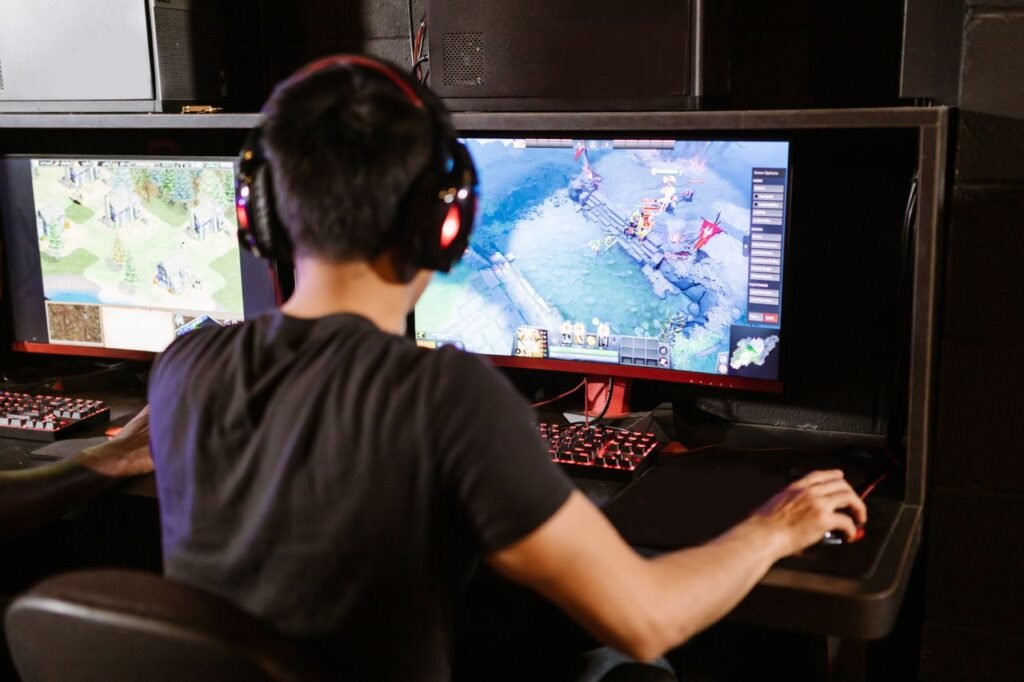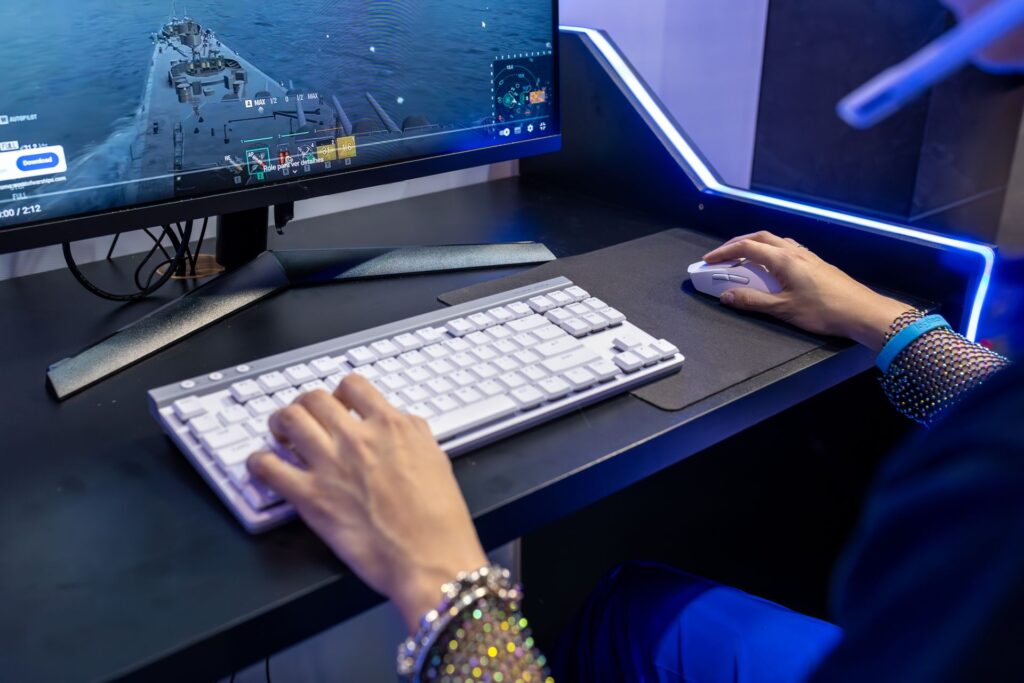
Three missed shots. Teammate sighs. You check your stats — 38% headshot rate, down from last week. You switch to a different crosshair. You lower your sensitivity. You watch a highlight reel of a pro player and wonder what they know that you do not.
Here is what they know: they stopped changing things.
Better aim in FPS games is not a settings problem. It is not a crosshair problem, or a mouse problem, or a DPI problem. Those things matter at the margins. The actual problem — the one that keeps most players stuck — is that they treat aim like a mystery to be unlocked rather than a physical skill to be built. And physical skills are built through repetition, not through settings changes.
This guide covers what actually moves the needle. Not the things that feel like progress. The things that produce it.
The Honest Diagnosis First
Before changing a single setting, answer this question honestly: do you actually know which part of your aim is failing?
Most players cannot answer that. They know they are missing shots. They do not know whether they are missing because their crosshair started in the wrong place, because their flick overshot the target, because they were moving when they fired, or because they lost a duel they should have won from a positioning disadvantage that had nothing to do with aim at all.
Treating all of those as the same problem is why most aim improvement efforts fail. The fix for poor crosshair placement is completely different from the fix for shaky tracking. Grinding flick scenarios when your real problem is first-shot accuracy is like doing bicep curls to fix a knee injury. Confident, focused effort in the wrong direction.
Spend thirty minutes watching back your own gameplay this week — even phone footage of your screen works. Watch specifically for where your crosshair is before each duel starts, not during it. If it is consistently in the wrong place — too low, aimed at a wall, centered on open space where no one is — crosshair placement is your problem. If it starts in the right place but the shot misses, your flick or tracking mechanic needs work. If you win the mechanical duel but still die, you have a positioning problem, not an aim problem.
Know what you are fixing before you start.
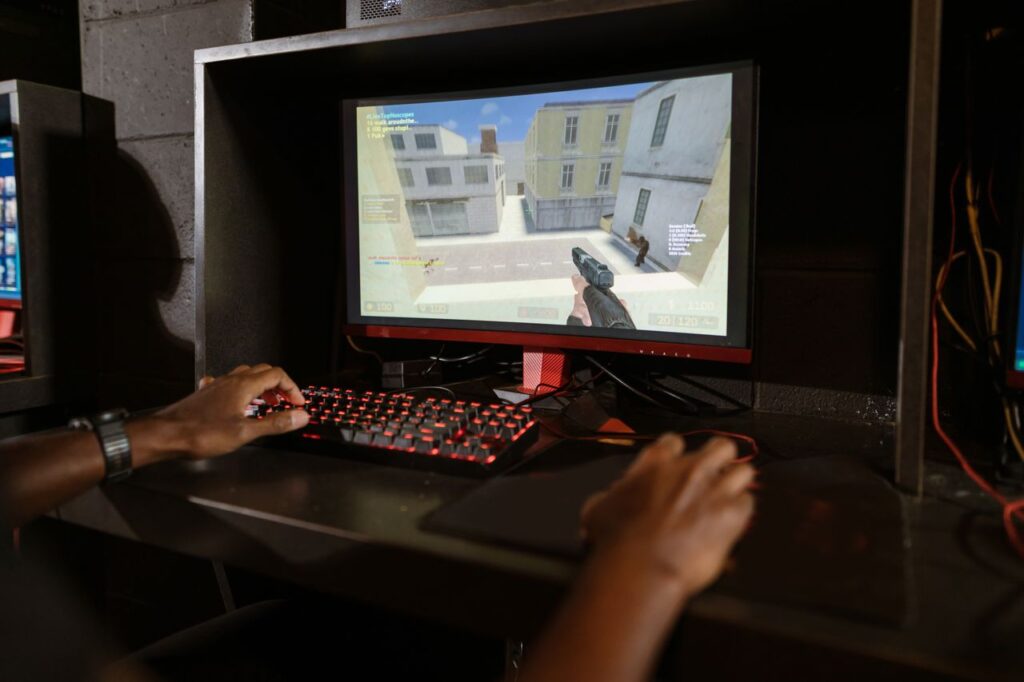
Sensitivity — Pick One and Stop Touching It
Your sensitivity setting is the relationship between how far your hand moves and how far your crosshair travels. Everything else in aim training builds muscle memory based on that relationship. Every time you change sensitivity, you erase a portion of that memory and start rebuilding from scratch.
This is the most damaging habit in competitive FPS and it is almost universal among players who are stuck.
Finding the right sensitivity:
Most professional FPS players use an eDPI — that is your mouse DPI multiplied by your in-game sensitivity — between 200 and 800.
- Valorant and CS2, where precision and crosshair placement matter more than fast tracking: most pros sit between 200 and 400 eDPI
- Apex Legends and games with fast movement and target switching: 400 to 800 eDPI is more common
- Console players: start at default, increase gradually until turns feel responsive without being twitchy
If you have no reference point, start at 400 eDPI. Use mouse-sensitivity.com to calculate this correctly for your specific mouse and game.
The rule that actually matters: Once you find a sensitivity that feels controllable, leave it alone for a minimum of 30 days. You will feel uncomfortable on day three. That discomfort is the muscle memory rebuilding. It is progress. Changing sensitivity to relieve that discomfort is the mistake.
Also: turn off mouse acceleration in Windows. Open Mouse Settings → Additional Mouse Options → Pointer Options → uncheck “Enhance pointer precision.” Mouse acceleration makes your crosshair move different distances for the same hand movement depending on how fast you move. That inconsistency makes building repeatable aim impossible.
If your hardware is holding back your aim, our gaming keyboard guide covers the switches and build quality that actually make a difference for competitive play.
The One Skill That Separates Every Skill Level
Crosshair placement is not mentioned in most aim guides because it is not exciting. There is no montage edit of someone pre-aiming a corner. There is no satisfying click when you do it correctly. It is invisible when it works.
It is also the single highest-impact skill in FPS gaming, at every level from beginner to professional.
Crosshair placement means keeping your crosshair at head height and aimed at where an enemy is most likely to appear — before they appear. Not reacting to the enemy. Being positioned for the enemy before the duel begins.
When a professional player seems to have inhuman reaction time, they usually do not. They pre-aimed the angle. Their crosshair was already within a small adjustment of the enemy’s head when the duel started. The “reaction” was a tiny correction, not a full flick across the screen. That is why it looks so fast.
The training method is simple and requires no aim trainer:
Spend five minutes per session walking through your maps in a custom lobby — no enemies, no pressure. At every wall, every corner, every angle you would normally peek in a real match, place your crosshair at head height against the surface. Walk the whole map doing nothing but this. Do not shoot anything. Just move and place.
After two weeks of this, your default crosshair position in real matches starts shifting automatically. The muscle memory builds passively. Players who do this consistently report that their aim “feels cleaner” without changing any settings — because fewer of their shots require large corrections to land.
The Three Aiming Skills — and Which One You Are Actually Weak At
FPS aim breaks down into three distinct mechanical skills. They train differently, they fail differently, and they matter in different proportions depending on your game.
Tracking is keeping your crosshair on a moving target continuously. This is the foundation. It trains your hand-eye coordination at its most fundamental level — the relationship between what you see moving and how your hand responds. Games that demand tracking: Apex Legends, Overwatch 2, any game with fast horizontal movement.
Flicking is moving your crosshair rapidly from one position to a new target. It feels like the most important skill because it produces the best-looking highlights. It is actually the least important of the three for most rank brackets, because most duels are decided before any flicking happens. Games that demand flicking: CS2 at close range, Valorant in specific situations.
Micro-adjustments is the fine correction work — small, precise crosshair movements to refine your aim when it is already close to the target. This is what determines whether close shots land or barely miss. It is the skill most players never practice deliberately because it is too unglamorous.
The mistake most aim training programs make is weighting these incorrectly. Standard aim trainer playlists are 80% flicking because flicking is satisfying to train. Most rank improvements come from better tracking and micro-adjustments.
Match your training to your game:
- CS2 and Valorant: crosshair placement first, micro-adjustment second, flicking third
- Apex Legends: tracking first, then micro-adjustment, then flicking
- COD: a balance of all three, with particular emphasis on tracking fast-moving targets
A 15-Minute Daily Routine That Actually Transfers
Consistency of practice produces more improvement than volume. Fifteen focused minutes daily produces faster gains than two-hour sessions twice a week. This is established in motor learning research and confirmed by the experience of players who have tracked their improvement over time.
Here is a structured warm-up that covers all three skills and takes fifteen minutes:
Minutes 0 to 5 — Tracking Open an aim trainer (Aim Lab is free; KovaaK’s is paid but the gold standard) and run a smooth tracking scenario. Keep your crosshair on a single target moving in unpredictable curves. Do not chase it frantically. Use smooth, controlled movements and let your eyes lead your hand. If you are overshooting, slow down. The goal is smooth contact, not speed.
Minutes 5 to 10 — Flicking Switch to a flicking scenario — targets appearing at random positions, snap to each one. Focus on landing on the target first, then worry about speed. Accuracy before speed. Speed before speed. Many players train this backward.
Minutes 10 to 15 — In-Game Crosshair Placement Load into your actual game’s practice range or a custom lobby. Walk through angles. Head height. Pre-aim every corner. Do this in the actual game because sensitivity feel between aim trainers and live games differs, and the final transfer layer matters.
One important note about aim trainers: if you use them with a different sensitivity than your game, the muscle memory does not transfer. Match your sensitivity exactly. Use a sensitivity converter if needed. Training at the wrong sensitivity for fifteen minutes a day is fifteen minutes of building muscle memory you cannot use.
Mouse Grip — The Foundational Hardware Decision
Your mouse grip determines how precisely you can execute aim mechanics. There are three grips, and the right one depends on the type of aiming your game demands.
Palm grip — Your entire hand rests on the mouse. Stable platform for tracking, slower for fast flicks. Best for games where you track moving targets over extended duels: Apex Legends, Overwatch.
Claw grip — Palm on the back of the mouse, fingers arched at the knuckles. Balanced between tracking stability and flick speed. The grip most professional players use across all genres.
Fingertip grip — Only fingertip contact. Maximum flick speed, minimum stability. Used by AWP and Widowmaker specialists who need extreme flick precision and rarely need extended tracking.
Whatever grip you use: anchor your forearm on the desk. Your wrist controls micro-adjustments. Your elbow drives large crosshair movements. Your shoulder should be relaxed and out of the motion entirely. Players who aim primarily from their wrist build a ceiling they cannot get past — the large movements become inconsistent because the wrist has limited range.
Hardware — What Actually Matters and What Does Not
The gaming peripheral industry is very good at making you feel like better hardware will fix your aim. Sometimes it will. Usually it will not. Here is the honest breakdown.
Matters: Monitor refresh rate is the single hardware upgrade with the clearest, most measurable impact on FPS performance. Moving from 60Hz to 144Hz makes enemy movement visibly smoother and reduces the perceived delay between your mouse input and the result on screen. In 2026, 144Hz is the competitive minimum. If you are on a 60Hz monitor and wondering why your aim feels imprecise, this is a contributing factor — and our guide on the best gaming monitors under $300 covers every option worth buying right now.
Mouse sensor quality matters at high sensitivity. At 400-800 eDPI, most modern mice perform identically. At very high sensitivity, sensor tracking inconsistencies become noticeable. If you are gaming at a sensible eDPI, a $30 mouse with a modern sensor and a $150 mouse will produce identical mechanical aim.
Does not matter: Expensive headsets do not improve aim. A heavier mouse does not improve aim. RGB lighting does not improve aim. A premium mousepad has marginal impact at normal eDPI.
Spend money on the monitor first. Everything else is secondary.
The Progress Timeline — What to Actually Expect
Most guides skip this entirely. They tell you what to do and let you wonder why nothing seems to be changing after a week.
Here is the real timeline for most players who practice consistently:
Week 1 to 2: Nothing feels better. Your aim trainer scores may actually drop slightly as you adjust to new mechanics. This is normal. The discomfort means something is changing.
Week 3 to 4: Crosshair placement in real matches starts feeling more natural. You catch yourself pre-aiming angles you would previously have peeked blind.
Week 5 to 8: Measurable improvement shows up in stats — accuracy percentages, average damage per round, K/D ratios. The improvement is real and trackable now.
Month 3 and beyond: The gains continue but slow. You are optimizing at this point, not rebuilding fundamentals.
Two important caveats. First, progress in aim trainers appears before progress in ranked matches — that gap is normal and closes over time. Second, if your rank is not climbing despite improved aim, you have a positioning or game-sense problem, not an aim problem. Aim is one variable in a complex system. A player with perfect aim and no game sense will lose to a player with average aim and excellent positioning every time.
The Thing Most Players Never Address
Tension in your hand and forearm is one of the most consistent causes of aim deterioration during long sessions, and almost no guide talks about it.
When you miss shots and feel frustrated, your grip tightens. A tighter grip restricts smooth mouse movement. Restricted movement produces worse aim. Worse aim produces more frustration. More frustration produces more tension. This cycle is real, it is common, and it is entirely self-reinforcing.
The fix is deliberate: after a bad round, before the next one starts, consciously relax your grip. Shake your hand out. Roll your wrist. Lower your shoulders. Reset your physical state before the mental state catches up.
Professional players who manage long tournament sessions well are not just mechanically skilled. They are physically disciplined about maintaining a relaxed arm and hand under pressure. That discipline is trainable with exactly as much intention as any other physical skill in this game.
Final Thoughts
Getting better aim in FPS games comes down to four things done consistently: locking in a sensitivity and leaving it alone, placing your crosshair correctly before duels begin, training the right skills for your specific game, and maintaining a physical state that lets your mechanics execute.
None of those things are exciting. None of them produce highlight clips. All of them produce measurable rank improvement over weeks and months for players who actually commit.
The players who improve fastest are not the ones who try the most different things. They are the ones who pick the right things and stop trying alternatives.
What is the biggest aim improvement you have made this year — and what actually caused it? Drop it in the comments.