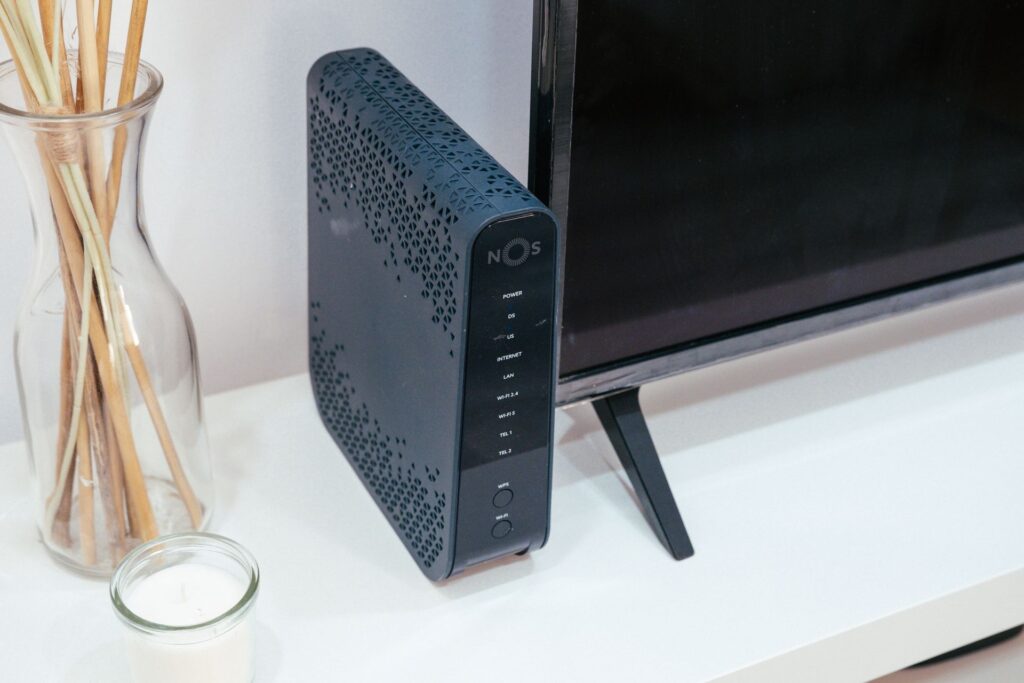
Most gaming router reviews are written by people who want to sell you a gaming router. They lead with antenna counts, LED lighting, and aggressive-looking chassis designs — none of which have any measurable effect on your ping. The actual specs that matter for gaming are buried in footnotes, if they appear at all.
Here is the version written for someone who wants to know whether a $300 router will actually stop their Valorant matches from spiking to 200ms during peak hours, or whether the problem is somewhere else entirely.
Spoiler: sometimes it is the router. Often it is not. This guide covers both.
The Real Cause of Gaming Lag — Router vs. Everything Else
Before spending anything, it is worth being clear about what a router can and cannot fix. This distinction alone will save a lot of people from buying hardware they do not need.
What a router can fix:
Home network congestion is the router’s domain. When your housemate starts a 4K stream, your sibling downloads a game update, and your smart TV runs a firmware check simultaneously — and your ping spikes from 20ms to 150ms during that window — that is a traffic management problem. A good router with active QoS (Quality of Service) or SQM (Smart Queue Management) can prioritize gaming packets over background downloads and streaming, keeping your game traffic moving while everything else queues behind it.
This same congestion issue affects mobile gaming too — if lag on your phone is the problem, our guide on reducing mobile game lag covers the network fixes that work on any device.
Wireless interference is also a router problem. An older 2.4GHz network shared with every neighbor’s router, microwave, and baby monitor produces unstable wireless connections that create lag spikes that look identical to congestion lag. A WiFi 6E or WiFi 7 router with a dedicated 6GHz band cuts through that congestion entirely because that band is simply less occupied.
What a router cannot fix:
Your ISP routing to a game server that is geographically distant from you. The physical distance between your home and the server has a minimum latency floor — no router on earth changes the speed of light. If you are based in Pakistan and connecting to a US East Coast server, a certain baseline ping is unavoidable.
ISP-side packet loss or throttling. If your internet provider is the problem, your home hardware is irrelevant.
The honest test before buying anything: run a ping test to your game’s regional server at multiple times of day using fast.com/network-tools or a game-specific server test. If your baseline ping is consistently 15-25ms but spikes to 150ms during peak hours, you have a home network congestion problem that a better router can address. If your baseline ping is consistently 80ms even at 3AM when no one else is home, the problem is upstream of your router.
WiFi Standards in 2026 — The Honest Comparison
The router market in 2026 is divided between WiFi 6, WiFi 6E, and WiFi 7. Here is what each generation actually delivers for gaming.
WiFi Standards vs. Latency Impact:
WiFi Standard | Frequency Bands    | Max Bandwidth | Gaming Latency Impact
─────────────────────────────────────────────────────────────────────────
WiFi 5        | 2.4GHz + 5GHz      | ~3.5 Gbps     | Acceptable for casual
WiFi 6        | 2.4GHz + 5GHz      | ~9.6 Gbps     | Good — less congestion
WiFi 6E       | 2.4GHz + 5GHz + 6GHz| ~9.6 Gbps   | Very good — 6GHz clean
WiFi 7        | 2.4GHz + 5GHz + 6GHz| ~46 Gbps    | Best — MLO reduces jitter
The upgrade that matters most for gaming specifically is the addition of the 6GHz band in WiFi 6E and WiFi 7. The 6GHz spectrum is less crowded — most neighboring routers, smart home devices, and interference sources operate on 2.4GHz and 5GHz. Moving your gaming device onto 6GHz means less competition for airtime, which directly translates to more consistent latency.
WiFi 7’s specific gaming advantage is Multi-Link Operation (MLO) — the ability to transmit and receive across multiple frequency bands simultaneously. This allows the router to route gaming packets across whichever band is least congested at any given moment. Independent testing showed WiFi 7 reduced latency by 20-30% compared to WiFi 6E in congested home environments. In a quiet home with few devices, that gap shrinks significantly.
The practical conclusion: if your current router is WiFi 5 or older, upgrading to WiFi 6 will produce a noticeable improvement. Upgrading specifically to WiFi 7 is worth it for households with many connected devices competing for bandwidth. For a single gaming device in a quiet network environment, a good WiFi 6 router with proper QoS configuration often performs identically to a WiFi 7 model at three times the price.
The Specs That Actually Matter for Gaming
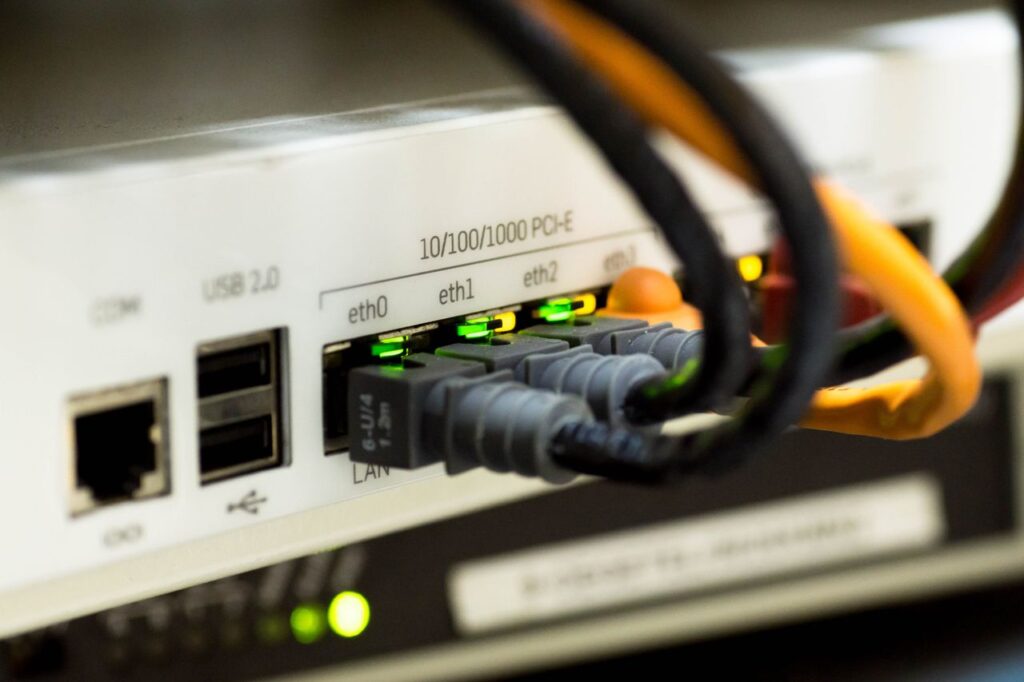
Ignore the antenna count, the RGB lighting, and the aggressive styling. These are the four specifications that directly affect gaming performance.
1. QoS / SQM Implementation
Quality of Service is the router’s traffic management system. When configured correctly, it identifies gaming packets and prioritizes them over background traffic — downloads, streaming, video calls. SQM (Smart Queue Management) is the more sophisticated version, actively managing queue depth to prevent bufferbloat, which is one of the most common and least-discussed causes of lag spikes in home networks.
Not all QoS implementations are equal. Some routers have QoS in name only — a basic priority list that does not adapt dynamically to actual traffic. The best implementations use active queue management algorithms (FQ-CoDel being the most effective) that maintain consistent latency under load.
2. Processor and RAM
A router’s CPU is what executes QoS, firewall rules, NAT, and all the other functions running simultaneously. A weak processor will create bottlenecks under heavy load — the router itself becomes the latency source rather than relieving it. Look for a minimum dual-core processor at 1.5GHz or above for gaming routers handling multiple devices. The flagship models in 2026 carry quad-core processors at 2.0GHz or higher.
If you are building a new PC to pair with your upgraded network, our budget gaming PC build guide covers the right hardware for 2026.
3. Multi-Gig WAN Port
If your internet plan delivers more than 1 Gbps, a standard gigabit WAN port creates a bottleneck before traffic even reaches your devices. With 2.5G and 10G internet plans increasingly available from ISPs in 2026, a 2.5G or multi-gig WAN port is worth having in any router you plan to use for three or more years.
4. Band Steering and Airtime Fairness
Band steering automatically moves devices to the optimal frequency band based on their capabilities and current network conditions. Airtime fairness prevents slower devices on the network from monopolizing wireless time and degrading performance for faster devices. Both features are present in mid-range and above routers in 2026 and both directly impact gaming consistency in multi-device households.
The Best Gaming Routers in 2026
These picks are organized by use case rather than price, because the right router depends on your specific situation more than your budget.
For Most Gamers — TP-Link Archer GE650 (~$149-179)
After testing by Tom’s Guide, the Archer GE650 set new benchmarks in its price class — reaching a peak throughput of 2.019 Gbps at 15 feet with consistent performance extending to 75 feet. Full WiFi 7 support, a dedicated multi-gig gaming port that prioritizes traffic from your console or PC over other devices, and active QoS that actually works rather than a checkbox implementation.
The GE650 is the recommendation for most gaming households because it delivers genuine WiFi 7 performance without the flagship price tag. The dedicated gaming port alone resolves the traffic prioritization issue for the majority of players — plug your PS5 or gaming PC into that port and gaming packets are automatically prioritized without touching a single QoS setting.
The trade-off: moderate range. It covers most apartments and smaller homes well. Larger homes with thick walls will need either a mesh system or a second access point.
Best for: Single-home competitive gamers who want genuine WiFi 7 performance at a reasonable price.
For Premium Performance — ASUS ROG GT-BE98 Pro (~$549)
The GT-BE98 Pro is the benchmark for gaming routers in 2026 according to independent testing by Analytics Insight. Quad-band WiFi 7, MLO across all bands simultaneously, 10G WAN port, and ASUS’s GameFirst VI software — one of the most sophisticated QoS implementations available, using AI-based traffic classification to identify and prioritize gaming packets dynamically.
The difference between the GT-BE98 Pro and a mid-range WiFi 7 router shows most clearly in congested environments — households with 30+ connected devices, simultaneous 4K streaming, cloud backups, and smart home traffic all competing with gaming. Under that load, where weaker routers start compromising game traffic, the GT-BE98 Pro maintains gaming latency within a few milliseconds of the baseline.
At $549, this is not a casual purchase. It is the right choice for households with demanding network environments and the budget to match.
Best for: Power users, large households with many connected devices, or competitive gamers who have ruled out ISP issues and want the best available router hardware.
For Budget-Conscious Players — TP-Link Archer AX21 (~$59-79)
If your current router is WiFi 5 or older and you are not ready to spend $150+, the Archer AX21 delivers WiFi 6 performance at a price that is difficult to argue with. Dual-band, AX1800 speeds, and basic QoS that handles gaming traffic prioritization adequately in smaller households.
It will not compete with WiFi 7 hardware in congested environments. It will deliver measurably better performance than an aging WiFi 5 router, with more stable 5GHz connections and better handling of simultaneous device traffic.
Best for: Players upgrading from an old ISP-supplied router or WiFi 5 device who want a meaningful improvement without a significant investment.
For Large Homes — NETGEAR Orbi 970 Mesh System (~$599-699)
A single router — no matter how powerful — has physical range limitations. For homes above 2,500 square feet or multi-story layouts with thick walls, a mesh system is the right solution rather than a more powerful router.
The Orbi 970 uses WiFi 7 across all nodes with wired backhaul support — meaning the connection between mesh nodes can run through ethernet rather than wireless, maintaining full bandwidth and low latency throughout the home. The alternative of WiFi-only mesh backhaul introduces latency at every hop.
Best for: Large homes where a single router cannot provide consistent coverage to the room where gaming happens.

Ethernet vs. WiFi — The Conversation Nobody Wants to Have
Every guide about gaming routers should address this directly, because the honest answer affects whether you need a gaming router at all.
A wired ethernet connection from your router to your gaming device — PS5, Xbox, gaming PC — eliminates wireless interference, eliminates band steering decisions, eliminates airtime contention, and provides consistently lower latency than any wireless connection regardless of the WiFi standard.
If you can run a cable from your router to your gaming device, a mid-range WiFi 6 router with good QoS will outperform an expensive WiFi 7 router used wirelessly. The cable is worth more than the router upgrade.
The reasons people do not do this are practical — cables across hallways, furniture placement, rental restrictions. If any of those apply to you, the gaming router investment makes full sense. If they do not apply, consider ethernet first.
Cat6 ethernet cable costs roughly $15 for a 10-metre run. It will produce more consistent gaming performance than any router upgrade. That is not a satisfying purchase compared to a piece of hardware with RGB lighting, but it is the truth.
And once your connection is sorted, getting the right monitor to see your improved performance is the next step — our guide covers every option under $300 right now.
Router Placement — Free Performance You Are Probably Leaving on the Table
This section is here because poor router placement is responsible for more gaming lag than outdated hardware, and fixing it costs nothing.
Place the router centrally and elevated. WiFi signals radiate outward and slightly downward from the antennas. A router in a corner of your home sends roughly half its signal into walls rather than toward your devices. A router on the floor loses significant signal to the floor itself. Central placement, on a shelf or elevated surface, reaches all areas of the home with more signal strength than any corner placement regardless of router quality.
Keep it away from interference sources. Microwaves, cordless phones, baby monitors, and neighboring routers all operate on 2.4GHz. Place your gaming router away from kitchen appliances and other electronics. On a 6GHz band, this matters less — but for 5GHz gaming, physical separation from interference sources reduces the variance in your wireless connection.
Test your actual ping improvement after placement changes. Use a ping monitoring tool while gaming to capture latency over time. Moving a router from a corner shelf to a central location and retesting takes ten minutes and frequently produces measurable improvement without spending anything.
Final Thoughts
The best gaming router in 2026 for most players is a mid-range WiFi 7 model with active QoS — the TP-Link Archer GE650 covers this without the premium pricing of flagship alternatives. The GT-BE98 Pro is the peak performer for demanding environments. The Archer AX21 is the right upgrade for players coming from older hardware who need improvement without significant investment.
Before buying anything: confirm the problem is your router, not your ISP or game server distance. Run ethernet if you physically can. Place your router centrally. Those free steps resolve a meaningful percentage of gaming lag issues before hardware spending is even necessary.
When you have ruled those out and the router is genuinely the limiting factor — the hardware options in 2026 are better than they have ever been at every price point.
What router are you gaming on right now, and what ping do you typically see? Drop it in the comments — useful data point for other readers.