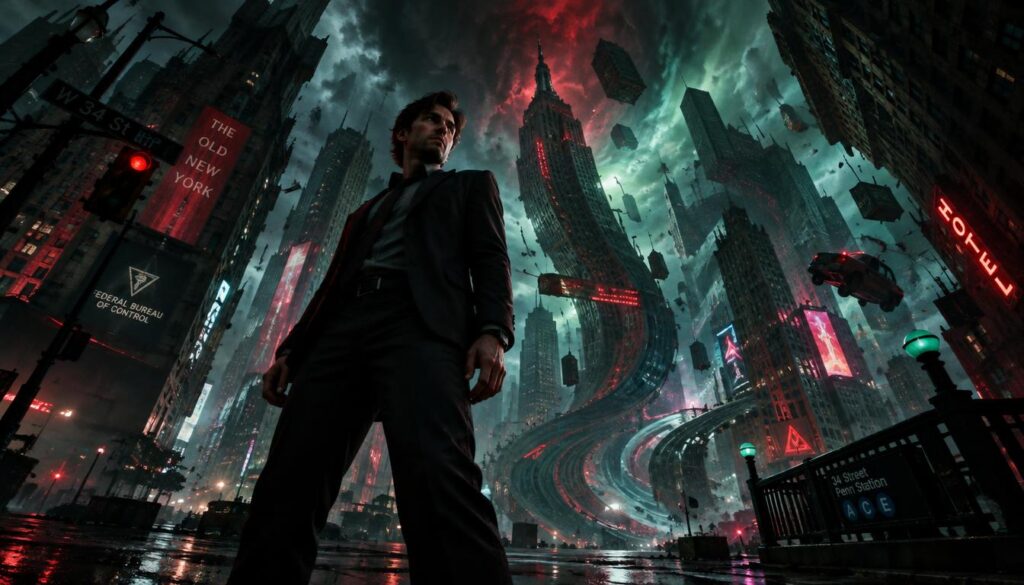
CONTROL Resonant is a bold, strange action RPG whose world and story are easier to recommend than its uneven combat pacing and navigation. If you want a clear purchase decision, look past the sales headline and consider how you feel about close-range fighting and exploration that can slow you down. The paranormal setting is the strongest reason to play.
Manhattan twists into a vivid maze of impossible views, and Remedy’s story gives the chaos a human center. Yet combat can drag, and finding your next objective may take patience. This review weighs the pull of its fiction against the friction you will meet along the way.
If you want Remedy’s uncanny fiction in a larger, more action-driven setting, the core appeal is clear, but your enjoyment depends on how much friction you tolerate.
Key Takeaways
- Expect paranormal storytelling built around Dylan and Jesse Faden.
- The setting makes Manhattan feel strange and unstable.
- Combat now centers on melee attacks, not Jesse’s gunplay.
- Large zones offer optional content, but the map can frustrate.
- Choose it for its story and setting, not friction-free action.
What is Control Resonant, and where can you play it?
CONTROL Resonant is a single-player action RPG, available at launch on PlayStation 5, Xbox Series X|S, and PC. You play as Dylan Faden, who searches for his sister Jesse while facing hostile entities. That shift in lead gives the game a new point of view within Remedy Entertainment’s shared world.
The game launched worldwide on September 24, 2026, for consoles and PC. Remedy Entertainment developed and published it, while Annapurna Pictures co-financed and co-produced it. Here is where you can play:
The September 24, 2026 launch covers PlayStation 5, Xbox Series X|S, and PC. The macOS version is scheduled for later in 2026.
| Platform | Availability or timing | Store or service |
|---|---|---|
| PlayStation 5 | Available at launch | PlayStation Store |
| Xbox Series X|S | Available at launch | Xbox Store |
| PC | Available at launch | Steam and Epic Games Store |
| GeForce NOW | Available | GeForce NOW |
| macOS | Later in 2026 | Steam and App Store |
The Xbox version supports Xbox Play Anywhere, which carries saves and achievements across Xbox, PC, and supported handhelds.
The useful exception is the Mac release window. If you play on Mac, its scheduled 2026 release is later than the console and PC launch.
Control Resonant Review: Remedy’s Fastest Selling Game Explained
The critical picture is positive overall, but the praise for atmosphere and design sits beside real reservations about combat and navigation. Metacritic’s platform scores run from 81 to 83. Critics often value the art direction, mood, and movement, while some find the action’s rhythm uneven. The split matters if you expect a tightly paced action RPG.

| Platform | Metascore | Metacritic label |
|---|---|---|
| PC | 83/100 | Generally Favorable |
| PlayStation 5 | 83/100 | Generally Favorable |
| Xbox Series X|S | 81/100 | Generally Favorable |
Metacritic lists an 83 score based on 85 critic reviews on one page. A separate critic-review page lists the same 83 score from 89 reviews.
That separate page counts 77 positive reviews, seven mixed reviews, and one negative review. Metacritic also labels its user score “Generally Favorable,” based on 1,227 ratings. Those figures describe different groups, so they do not mean every player shares critics’ view.
Platform results are close, with Xbox Series X|S at 81 and PC and PlayStation 5 at 83. OpenCritic reports an 86% critic recommendation rate, another broad signal rather than a guarantee of personal fit.
Individual reviews show a wider spread. Eurogamer and GamesRadar+ each scored the game 3/5, while Destructoid, GameSpot, and PCGamesN each gave it 9/10.
The reviews tend to agree on visual design and atmosphere, but they differ on how much the combat and exploration get in their way. Some praise the movement and the strange city, while others find map use cumbersome and RPG depth limited.
Those critiques point to a specific trade-off: the world may hold your attention even when its objectives feel hard to track. Combat pacing can also feel slow, especially if you want each encounter to build quickly toward a finish.
Aggregated scores compress many opinions into one number. Individual reviews reveal the range of tastes behind it, and player ratings offer a separate view from people who bought or played the game.
Treat the score as a useful consensus signal, then decide whether its specific trade-offs match what you want from an action RPG.
What is Dylan trying to do in warped Manhattan?
Dylan enters a Manhattan cut off by the Patterning while trying to find his missing sister, Jesse. The Patterning is a reality-bending event that cuts Manhattan off from the rest of the world and distorts time. Its effects reach far beyond the skyline, turning the city itself into a threat.

A missing sister and a city under quarantine
Dylan’s search for Jesse gives the crisis a personal goal. He must move through a city where familiar streets no longer behave as expected, while hostile entities make each step more dangerous.
Three pressures shape his mission:
- Find Jesse Faden, his missing sister.
- Confront hostile entities across Manhattan.
- Work under the Federal Bureau of Control (FBC), the agency overseeing the crisis.
The FBC’s presence adds tension to the search. Dylan has to deal with the agency while pursuing someone he cares about, rather than acting as a free agent in a city-wide rescue.
How the Patterning connects to Control
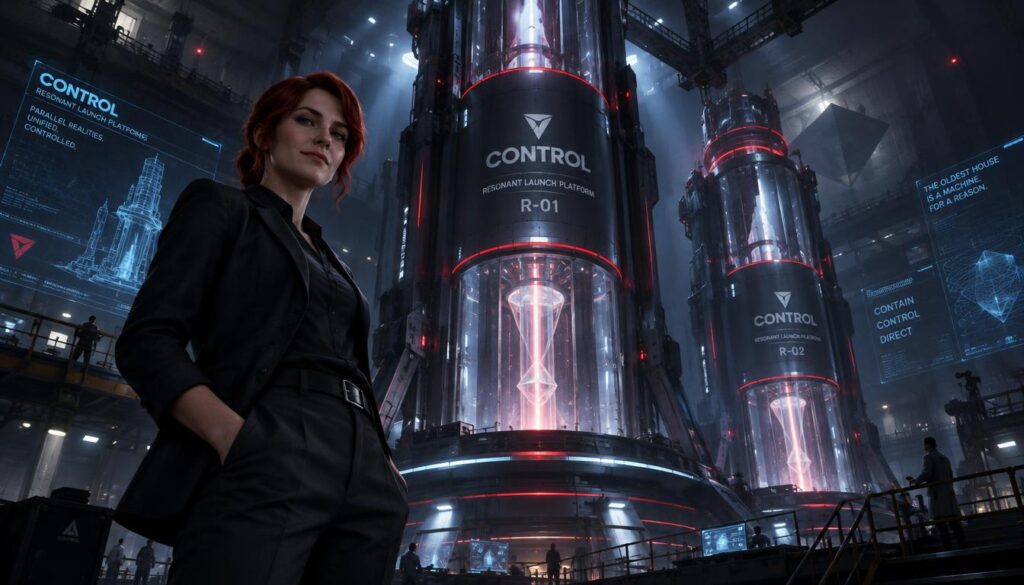
The story takes place seven years after the Hiss invasion of the Oldest House. You do not need an ending recap to follow the new crisis, though the earlier events give the setting more weight.
Remedy describes the game as an action-adventure RPG set in a warped Manhattan threatened by a reality-bending cosmic force. That description fits a story where ordinary streets become part of the danger, not just scenery between missions.
The Patterning also bends time, so the city does not feel like a normal place placed under quarantine. Its altered routes and impossible spaces make New York an active part of the story’s pressure.
The sequel follows Control by seven years, but it does not ask you to revisit every detail of the first game before starting. The Oldest House and the Hiss provide context, while Dylan’s search keeps the new plot focused.
The story’s central tension is whether Dylan can help contain a crisis while serving the agency that once held him captive.
How does the melee combat change the series?
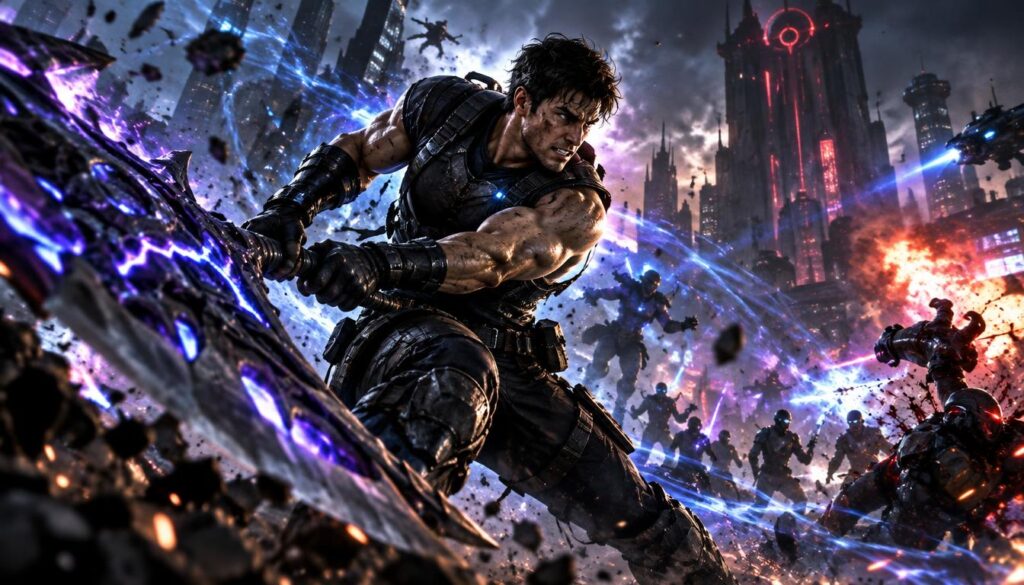
The biggest mechanical change is immediate: Dylan fights mainly at melee range instead of relying on the first game’s shooter rhythm. The Aberrant shifts the series toward close combat. That gives encounters a different pace, though not every returning player will prefer the change.
The Aberrant replaces Jesse’s shooting rhythm
Jesse’s fights in the first game centered on shooting, while Dylan closes the distance and attacks with the Aberrant. The weapon can shift forms, and Dylan can equip three melee weapons with different uses.
The available weapon forms suit different attack styles:
- Strike favors fast attacks.
- Glaive delivers heavy attacks.
- Cleave offers a balanced approach.
The switch changes how you read space during a fight. You must get close to enemies, then choose a weapon style that fits the encounter rather than leaning on the first game’s shooting loop.
Remedy’s combat and customization preview describes the intended aggressive combat loop and build choices. It outlines announced mechanics, not a review of the finished game.
Builds, powers, and difficulty adjustments
Defeating Resonant bosses unlocks supernatural combat abilities. The game also adds character statistics, multiple talent trees, and customizable weapons, giving you ways to shape Dylan’s strengths.
Those systems add choice, but they also ask you to keep track of several forms of progression. Enemy durability and the pace of upgrades can frustrate you, especially when a fight takes longer than its setup suggests.
Adjustable assist options let you tune the difficulty. You can ease some pressure without changing the basic melee focus, though those settings cannot remove every slow stretch or progression hurdle.
Build choices matter most when they support the way you like to fight. Weapon forms, abilities, and talents can change your approach, but they do not turn the game back into a shooter.
If you want to improve your aim in other shooter games, this practical FPS aim guide covers tracking, flicking, and mouse control. Those skills are less central here, since Dylan’s main weapon demands close-range choices.
If you prefer fast close-range combos, the shift is a draw; if you came mainly for Jesse’s gunplay, try a combat segment before committing.
Is Manhattan rewarding to explore?
Manhattan offers broad, strange areas to explore, but CONTROL Resonant is not one seamless open world. Remedy describes it as large, distinct zones. That structure gives you room to wander without promising one continuous map. The city rewards detours more than direct mission runs.

Large zones rather than one seamless open world
Some coverage calls the game open world, but Remedy’s lead gameplay designer describes a set of large, separate zones. Each area can feel expansive, yet you move between distinct spaces rather than across one uninterrupted city.
The zones hold side activities, hidden encounters, and optional discoveries. You can follow the main objective or spend time looking for things the direct route would leave behind.
Vertical routes and optional discoveries
Traversal adds height to the city’s routes. Supernatural abilities help Dylan move through environments affected by altered gravity, opening paths that would not work in a normal Manhattan.
The layered design can make exploration feel fresh, but map reading and objective tracking can be cumbersome. A marker may tell you where to go without making the route easy to understand, especially when the city bends around you.
Optional discoveries include:
- Lost-dog content.
- Taxi puzzles.
- Unsettling experiments.
These side activities give you reasons to look beyond the next mission marker. Their appeal depends on whether you enjoy stopping to test a strange corner of the world.
Exploring the layered city suits you if you like detours and hidden encounters. If you want a direct mission route, the zones and map may feel like extra work rather than a reward.
Expect memorable routes and optional discoveries, but do not expect the map interface to make every destination easy to find.
How strong are the visuals, sound, and PC technology?
The game’s strongest immediate impression is a Manhattan whose architecture looks unstable, vertical, and deliberately unreal. Its art direction and atmosphere stand out. Critics have praised the visual design, while the soundtrack helps give the city a distinct mood. The effect is uneasy rather than simply pretty.
A surreal city built for visual spectacle
Gravity-defying views make Manhattan feel built around impossible height. Buildings and routes seem to pull away from familiar city shapes, so you often look up as much as forward.
The game uses Remedy’s Northlight Engine. Its larger outdoor spaces use more diffused materials than the Oldest House’s reflective indoor rooms, creating a different look for the city and the agency’s home.
The soundtrack supports that contrast with an eerie tone. Visual design does more of the work, but sound helps make the streets feel unsettled rather than like a standard action map.
What the PC rendering features add
The PC version supports path tracing and Nvidia RTX Mega Geometry. Path tracing simulates how light moves through a scene, while RTX Mega Geometry supports detailed ray-traced scenes.
These are rendering features, not promises of a particular frame rate. Their effect depends on your hardware and chosen settings, so the most advanced lighting may ask more of your PC.
Check how your processor and graphics card balance at your chosen resolution with this PC bottleneck calculator. It offers a general hardware estimate, not a performance test for this game.
On PC, check your hardware against the game’s path-tracing requirements before treating its most advanced lighting features as an expected setting.
How much content is there beyond the main story?
Plan for about 24 hours if you focus on the main objectives. A 100% run takes around 43 hours. The scope depends on how much you explore. The listed medians offer useful comparison points, but they are not guarantees for your own playthrough.
| Play scope | Estimate | Median |
|---|---|---|
| Main objectives | About 24 hours | Not listed |
| Main-story median | Not listed | 23h 30m |
| 100% completion | Around 43 hours | Not listed |
| Completionist median | Not listed | 42h 6m |
The main-objectives estimate describes a focused run through the central missions. You can spend less time on detours, though moving through the zones still takes time.
The completionist estimate assumes a broader search for content across the game. Exploring optional areas and looking for hidden encounters can bring your total closer to that longer figure.
The table separates estimates from medians because they measure different play patterns. A median describes the midpoint of reported play times, not a finish date that every player should expect.
Your own time can shift with how closely you follow objectives, how much side content you try, and how long you spend finding routes through each zone. Those choices matter more than treating either number as a fixed limit.
Use the 23h 30m and 42h 6m medians as comparison points, not deadlines.
Can one million sales make Control Resonant profitable?
More than 1 million copies in three weeks made CONTROL Resonant Remedy’s fastest-selling game. Remedy’s stated return-on-investment target is 3 to 4 million lifetime copies. One million sales marks a strong opening, not the stated target.
A record launch is an opening, not a break-even point
The game had an initial development budget of €50 million. Remedy estimated that it would need 3 to 4 million lifetime copies sold to reach a 100% return on investment.
That target concerns sales over the game’s full lifetime, not just its first few weeks. Passing one million copies shows strong early demand, but it does not establish that the project has reached its stated return.
Sales alone do not show every cost or revenue detail. The figures here support a limited conclusion: the launch was fast, and the studio set a higher lifetime sales goal.
What the 1983 crash does and does not explain
The U.S. video game industry recession lasted from 1983 to 1985. It was not caused by one failed game, and it does not explain the finances of Remedy’s project.
U.S. home video game revenue fell from around $3.2 billion in 1983 to around $100 million in 1985, a drop of almost 97%. The decline reflected broad market problems rather than one title.
The market had become saturated with consoles and games, and many releases were poor quality. Interest in consoles also waned as personal computers drew players away.
The U.S. console industry recovered a few years later, largely after the NES release in October 1985. That recovery gives the downturn a wider industry context, not a direct parallel to Remedy’s sales target.
Historical crashes can show how quickly a game market shifts, but they cannot tell you whether a modern project will earn back its costs. Remedy’s estimate is the relevant measure for this game.
A fast start is meaningful, but the lifetime sales target is the more relevant measure of whether the project earns a 100% return on investment.
Should you play Control Resonant if you skipped Control?
You can start with CONTROL Resonant without playing Control. The earlier game gives you more history between Dylan, Jesse, and the Oldest House. The sequel was designed to remain accessible to newcomers. More context helps, but it is not a requirement.
You can start with CONTROL Resonant without playing Control. The first game adds context, but Remedy intended the sequel to welcome newcomers.
Remedy Entertainment intended the story to work for players who have not played the first game. Each title follows a different Faden sibling in a shared world, so you can understand Dylan’s goal without a full recap.
Playing Control first gives you more background on Jesse Faden, Dylan, and the Oldest House. It can deepen the connections between the games, but the sequel’s central search stands on its own.
The best fit is a player drawn to paranormal storytelling, striking environments, and melee action. Dylan’s close-range combat offers a new way into Remedy’s world, especially if you enjoy action that asks you to read enemy distance.
The fit is less certain if your main attachment is the original’s shooting or if you dislike map friction. The sequel changes the combat and asks for patience when you navigate its zones.
If you enjoy story-led paranormal games, our guide to horror games worth playing also covers different kinds of eerie stories, including Remedy’s Alan Wake 2.
Before you decide, watch a spoiler-free gameplay segment that shows both a melee encounter and a stretch of Manhattan traversal.
Conclusion
CONTROL Resonant is worth your time if its reality-bending story and inventive Manhattan outweigh its uneven navigation. Remedy’s strange storytelling and environmental design are its clearest draws, while the melee shift may not suit fans of Jesse’s shooting.
Map friction is also a real caveat if you want every objective to be easy to follow. The best next step is to watch a spoiler-free gameplay clip with both combat and traversal.
Watch a spoiler-free gameplay clip, then decide whether its melee combat is the kind of change you want from Control.
FAQ
How long does it take to finish Control Resonant?
Expect about 24 hours for the main objectives and around 43 hours for 100% completion. The listed medians are 23h 30m for the main story and 42h 6m for completionist play. Your own time will shift with how much optional content you explore and how long navigation takes.
Who is making Control Resonant?
Remedy Entertainment develops and publishes CONTROL Resonant, with Annapurna Pictures co-financing and co-producing it. Remedy is also the studio behind Control and the Alan Wake games. The partnership gives Annapurna a role in production and financing, while Remedy handles development and publishing.
What is the meaning of the game Control?
Control can be read as a theme about agency and power over paranormal forces, rather than a confirmed official definition of the title. Jesse and Dylan face forces that distort ordinary life and challenge their choices. That reading fits the games’ focus on people trying to act within systems they cannot fully command.
Is Control a good game?
Control is a strong choice if you like paranormal action and Remedy’s unusual storytelling style. The 2019 game stars Jesse Faden and builds its action around shooting and supernatural powers. CONTROL Resonant follows Dylan and changes the combat to a melee focus, so fans of the original may prefer one style over the other.
Is Control a woke game?
The described premise centers on paranormal threats, the FBC, and the Faden siblings, not on a stated political label. “Woke” can mean different things to different players, so the label alone does not tell you what the story contains. The game’s clear focus is a supernatural crisis and Dylan’s search for Jesse.
What game almost killed the gaming industry?
No single game caused the U.S. video game industry recession from 1983 to 1985. Home video game revenue dropped from around $3.2 billion in 1983 to around $100 million in 1985. Market saturation, poor-quality games, and growing interest in personal computers all contributed to the decline.
Do you need to play Control before Control Resonant?
No, you can start with CONTROL Resonant without playing Control first. Remedy designed the sequel to be accessible to newcomers, and Dylan’s search gives you a clear central goal. The 2019 game adds context for Jesse, Dylan, and the Oldest House, so it can make returning details more meaningful.
Is Control Resonant open world?
CONTROL Resonant uses large, distinct zones rather than one seamless open world. The zones contain side activities, hidden encounters, and optional discoveries, with routes shaped by strange spaces and altered gravity. You can explore beyond the main objectives, but the map and objective markers may make some destinations hard to find.