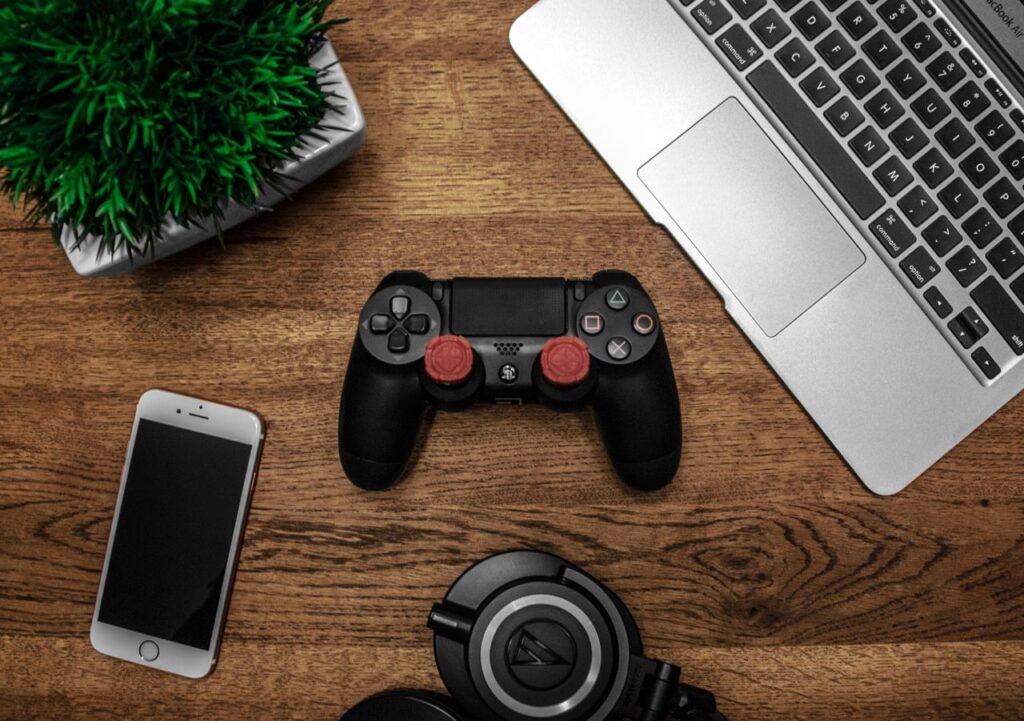
There are 3 billion mobile gamers in the world right now. There are 645 million console players. Mobile gaming generated $103 billion in revenue in 2025. Console gaming generated $45.9 billion. By every market metric, mobile has already won.
And yet — the Nintendo Switch 2 sold 3.5 million units in its first four days after launching June 5, 2026. PS5 has shipped 75 million units. GTA 6 is launching on console in November 2026 and PC players are being told to wait potentially two years. Console is not dying. It is just different.
The real question is not which platform is winning the market. The real question is which platform is right for how you actually game. That depends entirely on your life, your budget, and what you want from the experience — and the honest answer is rarely as simple as “mobile is cheaper so mobile wins.”
Here is the full breakdown.
The Numbers First — What the Market Actually Looks Like
Before the comparison, some context on where gaming actually is in 2026.
Mobile gaming holds 55% of the total global gaming market. Console sits at roughly 24%. Mobile reaches 83% of the world’s 3.6 billion gamers. Console reaches about 18%. By headcount and revenue, mobile is the dominant platform in gaming history.
But those numbers obscure something important: the average revenue per mobile gamer is dramatically lower than the average revenue per console gamer. Mobile reaches more people, many of whom spend nothing. Console players spend significantly more per person — on hardware, on games, and on subscriptions.
The console market also showed a 1% revenue decline in 2024 before recovering strongly in 2026, driven by the Nintendo Switch 2 launch and the anticipation around GTA 6. The market is not shrinking. It is concentrating around premium experiences that command premium prices.
Both platforms are healthy. Both have growing audiences. The choice between them is not about picking a winner — it is about picking the right tool for how you actually use it.
Cost — The Real Comparison
This is where most comparisons go wrong by being too simple. Mobile is not cheaper than console if you account for the full spending pattern.
The mobile cost picture:
A mid-range gaming phone costs $300-400 in 2026. Most people already own a phone. The upfront cost of mobile gaming is effectively zero for anyone upgrading their existing device anyway.
But the ongoing cost is where mobile gets complicated. Free-to-play games — where most mobile gaming happens — are free to download but designed with revenue extraction in mind. A player who makes occasional purchases in Genshin Impact, PUBG Mobile, and one battle pass per season across two games is spending $150-300 per year without feeling like they are spending anything significant. Someone who engages with gacha systems without discipline can spend dramatically more.
The console cost picture:
A PS5 costs $499. A Nintendo Switch 2 launched at $449 in June 2026. Games cost $70-80 each for major releases. PlayStation Plus is $17.99 per month for the Premium tier. The upfront cost is real and unavoidable.
But here is what the comparison misses: a $500 console bought in 2026 will still be playing current games in 2030. The hardware investment is front-loaded. Many console players spend less per year than mobile players who engage freely with live service purchases, once the hardware cost is amortized over four or five years.
There is no honest answer that says one is always cheaper. It depends entirely on your spending behavior in each ecosystem.

Games — The Honest Gap
This is where console still has a clear advantage, and it is worth being direct about it.
What console has that mobile does not:
Console exclusives define the platform in a way mobile cannot replicate. GTA 6 launches on PS5 and Xbox in November 2026 — not on mobile. God of War, Spider-Man, Horizon, and Sony’s exclusive lineup are console-only. Nintendo’s first-party catalog — Mario, Zelda, Pokémon in their main forms, Metroid — exists nowhere else. The most anticipated, most discussed, most critically acclaimed games in 2026 are overwhelmingly on console or PC.
The modding ecosystem is also entirely absent from mobile. GTA 5 on PC with mods is a fundamentally different game from its console counterpart. Skyrim with community mods has more content than any mobile game in history. This entire creative ecosystem does not exist on mobile platforms.
What mobile has that console does not:
Mobile’s breadth is genuinely impressive. Three billion players across a catalog of hundreds of thousands of games. Casual games that console cannot meaningfully serve — games played in two-minute sessions on the bus, quick puzzle games during lunch, endless runners, word games, light strategy titles. These experiences exist on mobile because mobile is the right platform for them, and no console port changes that.
Mobile also has cross-platform success stories — Fortnite, PUBG Mobile, Call of Duty Mobile — where the quality gap to console has narrowed to the point where serious competition happens on phones. The mobile version of Marvel Rivals launched in 2026 with a player base that rivals its PC and console counterpart in some regions.
The honest summary: if you care about the biggest, most ambitious game releases, console wins clearly. If you want the widest variety of experiences at every session length, mobile wins clearly.
Performance & Graphics — Where Console Still Leads
This one is not close in 2026. PS5 and Xbox Series X deliver sustained, optimized gaming performance that no smartphone matches.
A PS5 runs GTA 6 at up to 60 FPS with ray-traced reflections at 1440p. The most powerful gaming smartphones in 2026 — the latest Snapdragon 8 Elite devices — deliver impressive mobile performance but cannot approach the visual fidelity or sustained performance of dedicated console hardware running purpose-built software.
The gap has closed significantly. Genshin Impact on a flagship Android phone in 2026 looks genuinely impressive. But looking genuinely impressive for a mobile game is different from matching what a PS5 or Xbox Series X produces when pushed fully. That gap remains real and remains meaningful for players who care about visual quality and performance.
Thermal throttling compounds this on mobile. A console runs at sustained performance for as long as you play. A gaming phone runs hot under sustained load and reduces performance to protect itself. The best gaming phones with active cooling manage this better than budget alternatives, but the fundamental limitation exists regardless of the hardware tier.
Portability — The Mobile Advantage That Cannot Be Argued
This is where mobile wins outright and no amount of console hardware can compete.
Your phone is always with you. Gaming on a commute, in a waiting room, during a lunch break, while traveling, in bed — mobile makes all of this possible in a way that requires no planning. Console gaming requires a television or monitor, a power outlet, a specific location, and at minimum a few minutes to set up. Mobile gaming requires none of that.
The Nintendo Switch 2 challenges this comparison more than any other console, but it still requires carrying dedicated hardware. A phone is in your pocket anyway.
For players who game primarily in short, unplanned sessions scattered through their day — mobile is not just more convenient than console. For that use case, mobile is the only viable option.
Multiplayer & Online Gaming
Both platforms have strong multiplayer ecosystems in 2026, but they serve different social contexts.
Console multiplayer — built around PlayStation Network, Xbox Live, and Nintendo’s online services — is the platform for playing with friends across households, voice chat on a big screen, and competitive gaming communities built around specific franchises. The social infrastructure is deep and well-established.
Mobile multiplayer is built for larger, more anonymous player pools and cross-play that often includes PC players in the same lobbies. PUBG Mobile, COD Mobile, and Wild Rift all have massive active communities. The competitive scenes for these titles are genuinely serious — PUBG Mobile’s global tournament prize pools reached $3 million in 2026.
The key difference: mobile multiplayer is accessible anywhere. Console multiplayer is better when you are at home with time to commit.
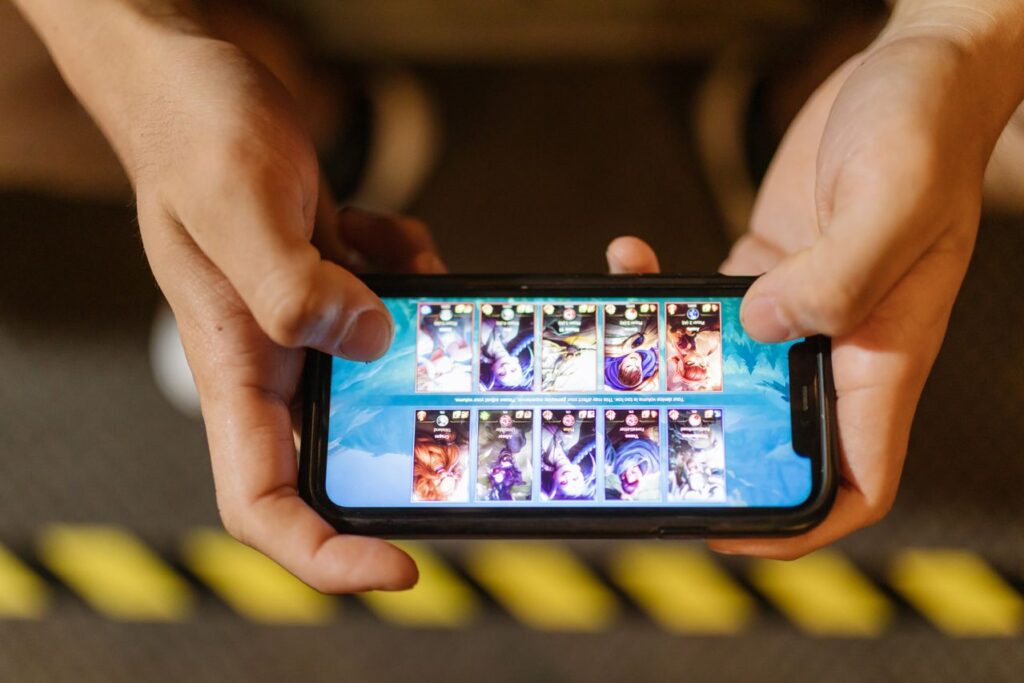
Who Should Choose Mobile Gaming
Mobile is the right primary gaming platform for you if:
Your sessions are short and unpredictable. If you game in ten to twenty minute windows throughout the day rather than two-hour dedicated sessions, mobile suits your lifestyle in a way console cannot.
Budget is a genuine constraint. You already own a smartphone. The barrier to entry for mobile gaming is effectively zero for most people.
You primarily play casual or social games. Word games, puzzle games, card games, light strategy titles — these genres exist on mobile in a form that fits the platform. Console ports of these genres rarely improve on the mobile experience.
You travel frequently. Mobile gaming requires nothing beyond your phone and earphones. For frequent travelers, this is simply the practical choice.
Who Should Choose Console Gaming
Console is the right primary gaming platform for you if:
You want the best games, period. GTA 6, Spider-Man, God of War, Zelda, major AAA releases — these land on console first and often only. If you want to play the games the whole world is talking about, console is where they are.
You have dedicated gaming time. If you set aside two to three hours specifically for gaming, the console experience — big screen, dedicated controller, immersive audio — is meaningfully better than gaming on a phone.
You care about performance and visual quality. No mobile device in 2026 matches what a PS5 or Xbox Series X produces. If you care about how games look and perform, console wins.
You play with friends in the same household. Local co-op, couch gaming, passing the controller — this entire social gaming context exists on console in a way mobile cannot replicate.
The Comparison at a Glance
| Factor | Mobile | Console |
|---|---|---|
| Upfront cost | Low (already own phone) | High ($449-499) |
| Game library | Enormous breadth | Best major releases |
| Performance | Improving, throttles under load | Sustained, optimized |
| Portability | Always with you | Requires setup |
| Session flexibility | Any length, anywhere | Better for longer sessions |
| Online multiplayer | Massive player pools | Deep social infrastructure |
| Exclusives | Limited | Significant advantage |
| Modding | None | PC has it, console limited |
| Market size | 3 billion players | 645 million players |
The Honest Answer
Most people reading this should own both — not because the answer is always “get everything,” but because mobile and console serve genuinely different needs that rarely overlap.
Mobile gaming fills the gaps in your day. Console gaming fills the dedicated sessions when you have time and space to commit. These are not competing use cases. They are complementary ones.
If you genuinely can only choose one: pick console if you care about playing the biggest games at their best. Pick mobile if you care about gaming anywhere, anytime, with zero friction.
The market has 3 billion mobile gamers and 645 million console players. Both numbers are real, and both groups are right for what they are getting from the platform they chose.
Are you primarily a mobile gamer, console gamer, or both? Drop it in the comments — always interesting to see how people actually split their gaming time.